
This bug I found on a B2B platform on the home page. This credentials leaked here are accessible to any user with the internet no login required at all.
So I got invite to this new program and started looking at the scope, I checked all the domains and particularly one domain seemed to be exciting for me as there were different features. I created accounts there and started testing it and found a lot of the issues like XSS, IDOR’s and know this is not properly designed keeping security in mind at all.
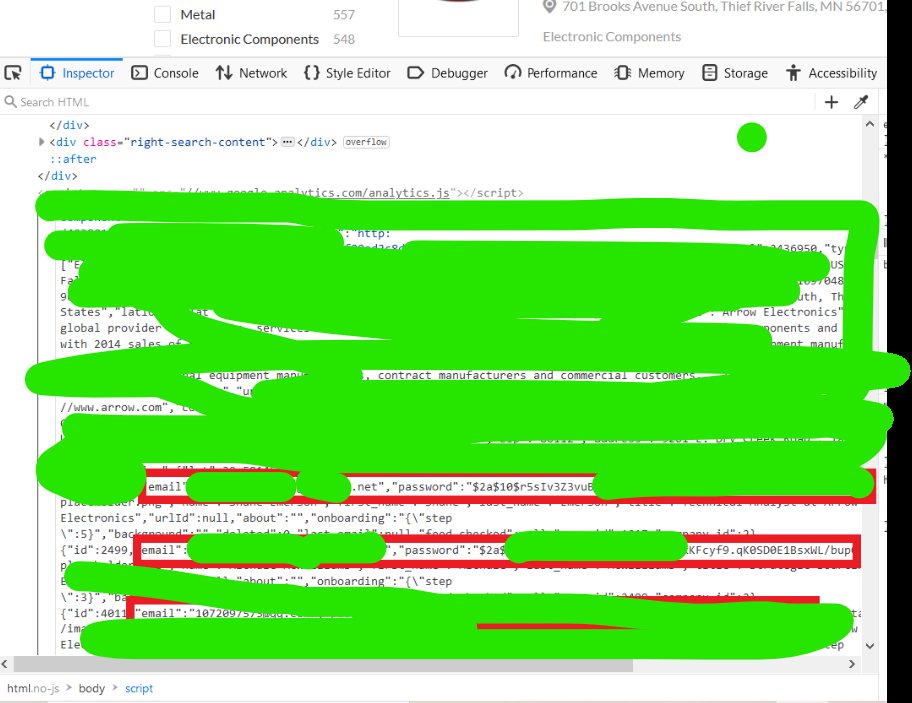
I was checking for reflection of my XSS payload on the home page in the source code using Inspect Element from the browser. Inside one of the inline <script> tags, the page was rendering a JavaScript object that included member records for the platform. Each record contained things like:
- Full email address of the member
- bcrypt password hash of the member
- Other account metadata (names, company info, etc.)
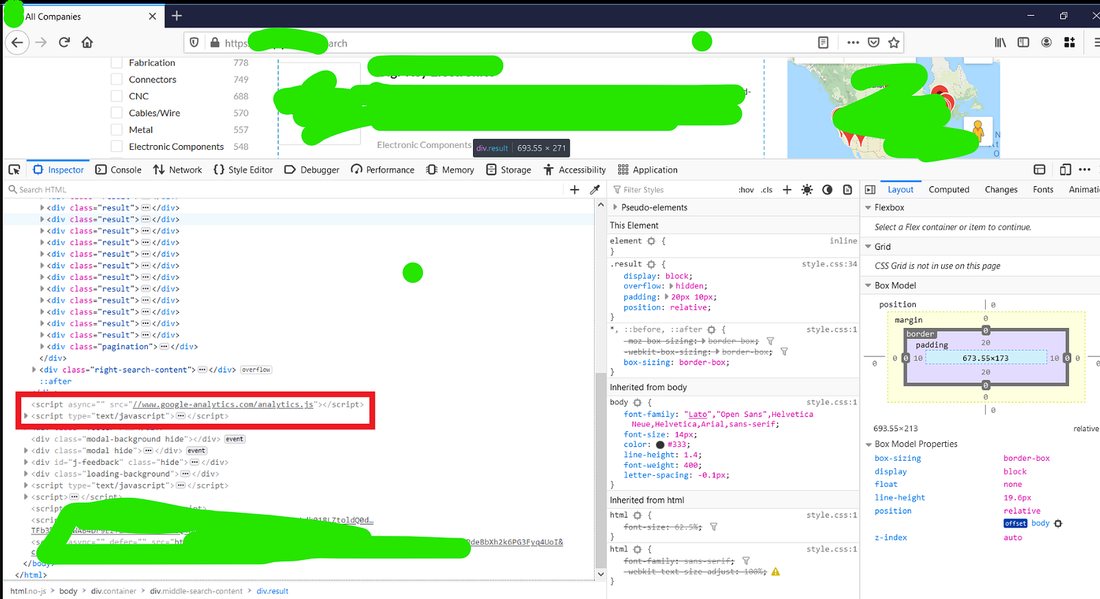
It was hardcoded into the HTML response of a public page, rendered server-side, and sent to every visitor who loaded the URL. Here this is a issue but the passwords are encrypted, bcrypt is a strong, slow, salted hashing algorithm. You can’t trivially crack a bcrypt hash the way you can MD5 or SHA1. So at first glance, you might think: “hashes leaked, but they’re bcrypt, no big deal.”
However if someone used the commonly used passwords like Summer2024! the attacker can access their account with the combination of the email address even if it is bycrypt they can be enumerated. But in future if there is technology that can crack that algorithm than that is a issue.

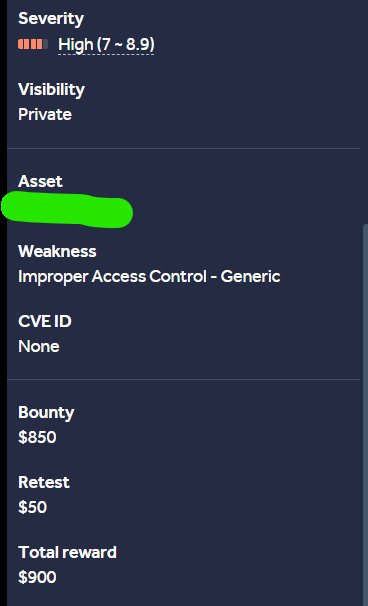
They took this as HIGH severity due to the un-exploitability of the hashed passwords and paid $850 for it and fixed immediately within 30 minutes.
Hope so you have enjoyed this :)
Many Thanks